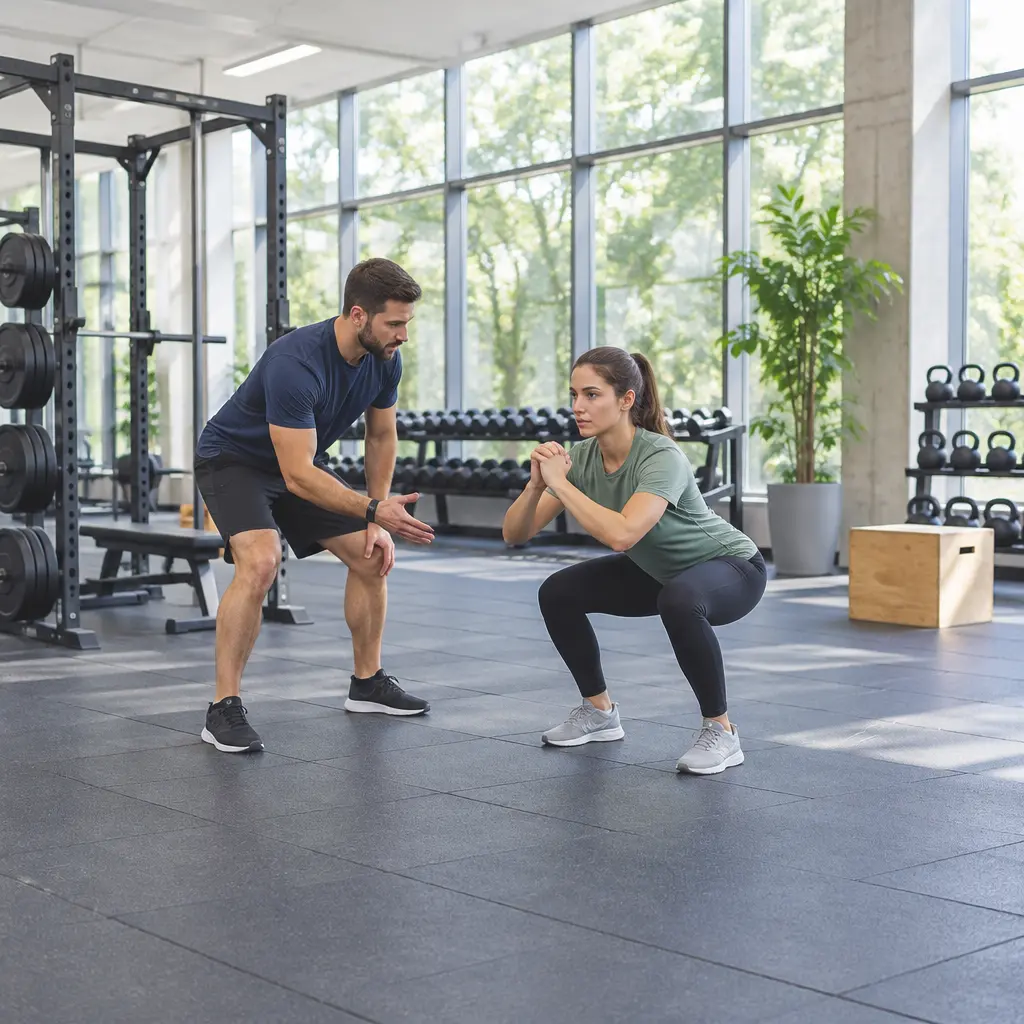
Personal training is individualized exercise coaching in which a qualified trainer helps a client plan and perform physical activity toward specific goals. Many people notice early changes in exercise confidence, technique, or stamina within a few weeks; visible body-composition changes often take longer and vary widely. The Centers for Disease Control and Prevention (CDC) recommends at least 150 minutes of moderate-intensity aerobic activity and muscle-strengthening activity on two days each week for adults, but meeting that guideline does not guarantee a particular appearance or timeline. How quickly results show depends on the goal, starting point, training plan, consistency, recovery, nutrition, and how progress is measured.
What “results from personal training” means
There is no single evidence-based deadline for seeing results from personal training. The American College of Sports Medicine (ACSM) describes resistance-training progress in terms of adaptations such as improved strength and muscular fitness, while the CDC’s activity guidance sets health-related activity targets rather than promising a specific outcome by a set date. In practice, results may include better movement control, increased strength, improved aerobic capacity, changes in body measurements, or greater confidence exercising.
The kind of result matters: a client learning to squat safely may notice progress before a change in muscle size, while someone training for endurance may improve workout duration before noticing a difference in weight. The timeframe estimates below are practical ranges, not guarantees; research findings describe groups, and individual responses differ.
Early changes: technique, confidence, and routine
During the first few sessions, progress often means learning how to perform exercises, adjust equipment, choose suitable loads, and follow a repeatable plan. These changes are meaningful even if they are not visible in a mirror or on a scale. A trainer can also help establish attendance and activity habits, which are important because adaptations require repeated practice rather than isolated workouts.
Strength and fitness: commonly several weeks
Strength or stamina may begin improving over several weeks of regular, appropriately challenging exercise. Early strength gains can reflect better coordination and nervous-system adaptation as well as muscle changes. The National Strength and Conditioning Association (NSCA) notes that training outcomes depend on factors including training status, program design, and recovery; therefore, a new exerciser and an experienced athlete should not expect identical progress.
Visible body-composition changes: often longer and less predictable
Changes in muscle definition, waist measurements, or body weight may take longer to detect and are affected by eating patterns, sleep, stress, genetics, and starting body composition. Scale weight alone can be misleading: it may fluctuate with hydration, food intake, and other short-term factors, while strength or fitness improves. The CDC emphasizes that healthy weight management involves physical activity alongside eating patterns and other lifestyle factors, rather than exercise in isolation.
Factors that shape the personal-training timeline
The timeline is best understood as the interaction of training dose, individual circumstances, and recovery. A well-designed program matches the client’s goal and ability, then adjusts as performance changes. A trainer’s role is not simply to make workouts harder: it is to provide appropriate progression, feedback, and accountability while keeping the plan safe and sustainable.
Goal, baseline, and training history
A clear goal determines what to measure. For example, a client seeking more strength might track repetitions and loads, while someone focused on cardiovascular fitness could monitor walking pace or recovery. People new to structured exercise may make noticeable improvements in basic skill and fitness, whereas experienced trainees may need more specific programming to move beyond a plateau.
Consistency, frequency, and progressive overload
Consistency means completing enough planned activity over time, not relying on occasional intense sessions. Progressive overload—the gradual adjustment of training challenge, such as adding repetitions, resistance, or duration when appropriate—helps provide a reason for the body to adapt. The CDC’s adult guideline of 150 minutes of moderate-intensity aerobic activity per week plus muscle-strengthening activity on at least two days offers a public-health benchmark; an individual plan may need to build toward it gradually.
Recovery, nutrition, and health considerations
Training results also depend on recovery between sessions, adequate sleep, suitable nutrition, and the ability to exercise without aggravating an injury or medical condition. A trainer should adapt exercise to a client’s needs and refer health questions to an appropriate clinician. People with chronic conditions, significant pain, or concerns about starting exercise should seek medical guidance when appropriate.
How to recognize progress before it becomes visible
Progress tracking helps distinguish a genuine trend from day-to-day fluctuations. A trainer and client can agree on a small set of measures at the start, review them periodically, and adjust the plan if progress stalls or the program feels unsustainable. Measurements should support health and performance goals rather than create pressure to pursue a particular body shape.
Performance and movement measures
Useful indicators include the load or repetitions completed with good form, the time or distance sustained during an aerobic activity, balance, range of motion, and perceived effort. For example, a client who can complete more controlled repetitions at the same resistance has a concrete performance improvement, even if body weight has not changed.
Health, habit, and body-composition measures
Depending on the goal and the client’s preferences, progress can also include weekly activity minutes, attendance, energy during daily tasks, or clinician-monitored health measures. If body composition is being tracked, use consistent methods and conditions, and interpret results as trends rather than treating one reading as definitive. Some measures, including blood pressure or glucose, should be assessed and interpreted by qualified health professionals.
Setting realistic expectations with a personal trainer
At the beginning, ask the trainer to translate the goal into a plan, explain how progress will be evaluated, and clarify what can reasonably be expected given your schedule and starting point. A useful plan includes exercises matched to ability, a progression strategy, recovery time, and alternatives for missed sessions or changing circumstances. Be cautious of promises of guaranteed weight loss, rapid transformation, or identical results for every client.
A practical review might compare baseline and current performance every few weeks, while checking session attendance and how the program feels. If there is no progress in the chosen measures after a consistent period, the answer may be to reassess the goal, training dose, recovery, or measurement method—not automatically to train harder. Persistent pain, unusual symptoms, or excessive fatigue warrant pausing and seeking appropriate professional advice.
Conclusion: results depend on the goal and the process
Personal-training results do not arrive on one universal schedule. Technique and confidence may improve early; strength and fitness often develop over several weeks of consistent practice; and visible body-composition changes can take longer and depend on factors beyond the workout itself. Use goal-specific measures, follow a progressive and recoverable plan, and review trends with your trainer rather than judging success by a single scale reading. To get started, agree on a baseline and a realistic review schedule, and consult a healthcare professional when medical concerns affect exercise.
Sources: Centers for Disease Control and Prevention, “Adult Activity: An Overview,” https://www.cdc.gov/physical-activity-basics/guidelines/adults.html; American College of Sports Medicine, “Progression Models in Resistance Training for Healthy Adults,” Medicine & Science in Sports & Exercise, https://journals.lww.com/acsm-msse/fulltext/2009/03000/progression_models_in_resistance_training_for.26.aspx; National Strength and Conditioning Association, Essentials of Strength Training and Conditioning, 4th ed., https://www.nsca.com/education/articles/kinetic-select/essentials-of-strength-training-and-conditioning/; Centers for Disease Control and Prevention, “Steps for Losing Weight,” https://www.cdc.gov/healthy-weight-growth/losing-weight/index.html.