
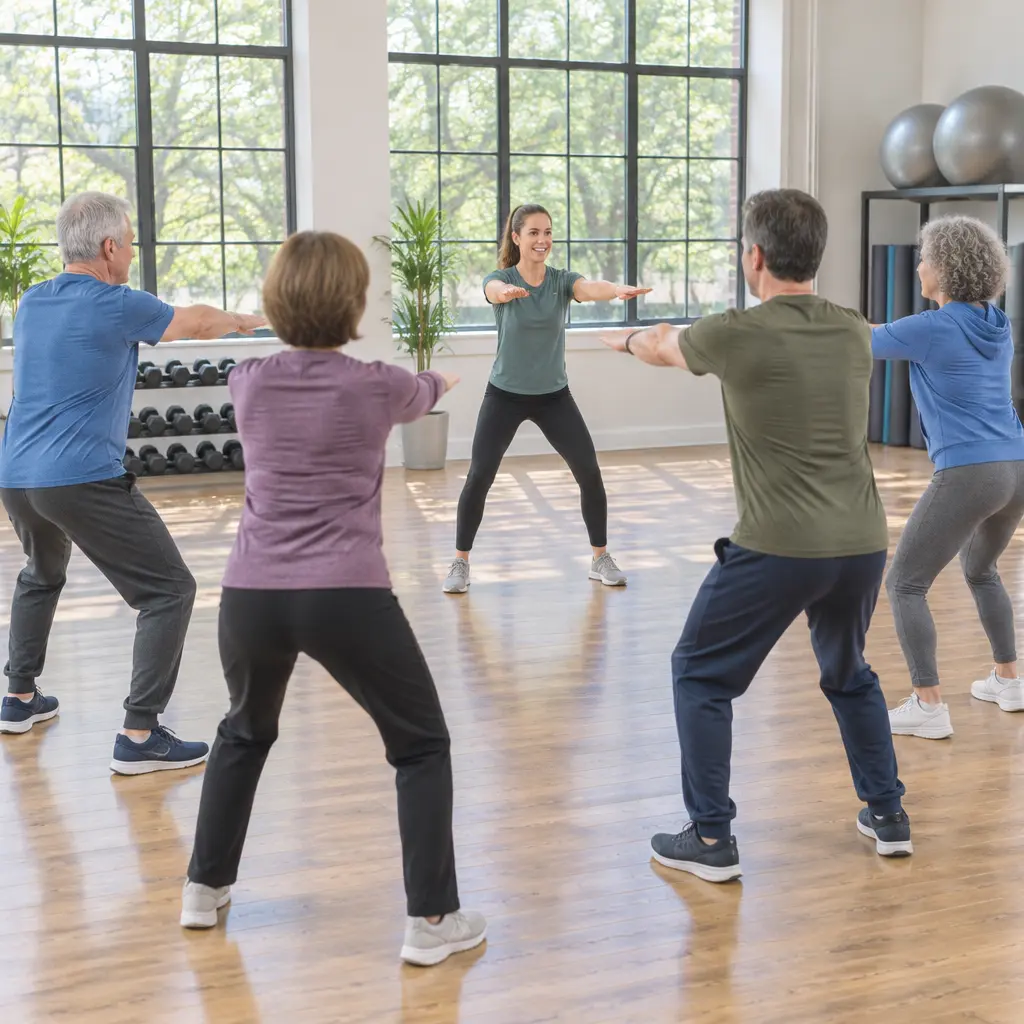
Personal training and group classes are two common ways to build fitness, but they differ in coaching attention, structure, social support, and cost. Personal training provides individualized guidance from a trainer, while group classes deliver instructor-led exercise to several participants at once. Neither format is universally better: the right choice depends on your goals, experience, preferences, health needs, schedule, and budget. The American College of Sports Medicine recommends that adults generally get 150–300 minutes of moderate-intensity aerobic activity each week, alongside muscle-strengthening activity on at least two days—goals that can be pursued through either format or a combination of both.
How Personal Training and Group Classes Differ
Personal training is individualized exercise instruction, typically delivered one-to-one or in a small training partnership. The National Academy of Sports Medicine describes personal trainers as professionals who assess clients, develop exercise programs, provide instruction, and monitor progress within their qualifications. Group fitness classes, by contrast, organize multiple participants around an instructor-led session, often with a shared format such as cycling, strength training, dance, or yoga.
The main distinction is how instruction is distributed. A personal trainer can adapt exercise selection, workload, and coaching cues to one client; a group instructor must guide the class as a whole while offering modifications where possible. Group classes can provide social connection and a scheduled routine, whereas personal training can offer more detailed feedback and individualized progression. These differences matter because a format that feels motivating and manageable is more likely to fit into a sustained exercise habit.
Individualization, feedback, and progression
Individualization means adjusting exercise to a person’s abilities, goals, preferences, and constraints. In a one-to-one session, a trainer can spend the session observing movement, cueing technique, and changing exercises or resistance based on the client’s response. This can be useful for beginners learning unfamiliar movements, people returning after a break, or clients who need close attention to exercise modifications.
A group instructor can still demonstrate options and provide general corrections, but cannot usually give every participant continuous one-to-one observation. Class size, room layout, and exercise complexity affect how much individual feedback is practical. The U.S. Department of Health and Human Services’ Physical Activity Guidelines emphasize that adults can gain health benefits from physical activity and that activity can be accumulated in different ways; this supports choosing a sustainable approach rather than assuming one delivery format is essential.
Structure, accountability, and social support
Both formats offer structure, but they create accountability differently. Personal training usually involves appointments and direct follow-up with a trainer. Group classes provide a set start time and the presence of other participants, which some people find energizing. A 2017 systematic review and meta-analysis in the journal Obesity Reviews found that group-based physical activity interventions can support participation and health-related outcomes, although results depend on program design and participants.
Social motivation is not guaranteed: some people enjoy the shared atmosphere, while others prefer privacy or find a fast-paced class intimidating. Likewise, an appointment with a trainer can help establish a routine, but scheduling and cost may make frequent sessions difficult. Consider which form of accountability you are most likely to maintain over time.
When Personal Training May Be the Better Fit
Personal training may suit people who want close instruction, a tailored plan, or help navigating specific constraints. It is not automatically safer or more effective for every person, and a trainer’s qualifications and scope of practice matter. Trainers are not substitutes for physicians or physical therapists; people with injuries, symptoms, or medical conditions should seek appropriate clinical advice before starting or changing exercise.
Beginners and people learning technique
A beginner may benefit from a trainer’s help learning equipment setup, movement patterns, and ways to scale effort. For example, someone new to resistance training could learn a small set of foundational exercises and receive feedback before joining a circuit class. The National Strength and Conditioning Association’s guidance on resistance training stresses that exercise selection, technique, and progression should be appropriate to the individual’s training status and goals.
A few introductory sessions may be enough for some people; others may prefer ongoing coaching. Ask the trainer how progress will be measured and how the plan will change as skills improve. Useful indicators can include consistency, technique, workload, and whether the program remains challenging without becoming unmanageable.
Specific goals and tailored programming
Personal training can be helpful when goals call for a carefully sequenced plan, such as improving general strength, preparing for a recreational event, or building confidence with particular exercises. The trainer can set milestones and adjust the program as performance, schedule, and recovery change. For weight management or broader health goals, exercise is only one part of the picture; nutrition, sleep, medical factors, and day-to-day activity can also matter.
A practical example is a client preparing for a hiking trip who wants to build leg strength and stamina while accounting for limited training time. A trainer could combine resistance exercises, balance work, and gradual aerobic conditioning, then revise the plan based on the client’s response. This is an illustration of tailored programming, not a guarantee of a particular outcome.
Modifications and close supervision
People who need frequent exercise modifications may value one-to-one coaching, provided the trainer has relevant competence and stays within professional boundaries. Examples include adapting movements for limited mobility or helping a client choose an appropriate starting level. If a health condition or injury is involved, a clinician should advise on exercise restrictions or rehabilitation; a personal trainer can then work within that guidance rather than diagnose or treat the condition.
When Group Classes May Be the Better Fit
Group classes may be a strong option for people who enjoy shared energy, scheduled sessions, and a clear workout plan. Classes cover many formats, from low-impact movement and yoga to vigorous cycling and strength circuits. Their suitability depends on the instructor, class size, intensity, available modifications, and how comfortable a participant feels following group instruction.
Motivation and community
A class can make exercise feel social and reduce the effort involved in planning a workout: the instructor selects the sequence, and participants follow a shared structure. The Centers for Disease Control and Prevention notes that physical activity can support health and well-being, while regular participation is important for realizing ongoing benefits. For some, the community and routine of a class make consistency easier.
Before enrolling, consider whether the class culture suits you. A welcoming instructor who explains options and encourages participants to work at an appropriate effort can make a substantial difference. If the format relies on competitive pacing or movements you have not learned, ask about beginner sessions or modifications.
Variety, convenience, and cost
Group schedules often provide multiple workout styles and time slots, and many gyms include classes in a membership. This can make classes less expensive per session than one-to-one coaching, though prices vary by location, facility, instructor, and membership terms. The U.S. Bureau of Labor Statistics’ Consumer Expenditure Surveys track household spending categories, including membership fees and fees for lessons or instruction, but they do not establish a single nationwide price comparison between personal training and group fitness.
Variety can help participants explore different forms of movement, but frequent changes are not required for fitness. A well-chosen class that someone attends regularly may be more useful than a long list of options that rarely fit their schedule. Check class capacity, booking rules, cancellation policies, and whether equipment is provided.
Choosing an appropriate class intensity
Class labels such as “beginner,” “strength,” or “high intensity” are not standardized across all facilities. Ask the instructor what the session involves, whether alternatives are offered, and how participants can regulate effort. The Physical Activity Guidelines describe moderate intensity as activity that noticeably increases breathing and heart rate while still allowing conversation; vigorous activity makes conversation difficult. These are general intensity cues, not a substitute for individualized medical advice.
Cost, Safety, and Results: What to Compare
A useful comparison looks beyond the price of a single session. Consider total monthly cost, travel time, cancellation rules, class access, and the amount of coaching you need. For safety and quality, assess the professional’s credentials, experience, communication, and willingness to adapt exercise rather than relying on promises of rapid transformation.
A simple decision comparison
- Choose personal training if individualized programming, regular technique feedback, or close exercise modification is a priority and the cost fits your budget.
- Choose group classes if you enjoy social exercise, want a scheduled session, and can find a class with an appropriate pace and useful modifications.
- Combine both if you want to learn technique in personal sessions and then use classes for variety, community, or additional weekly activity.
- Try before committing by asking about introductory sessions, trial classes, trainer consultations, and cancellation terms.
Safety and professional credentials
A qualified professional should ask about relevant exercise history, explain how movements can be modified, and respond appropriately if a participant feels pain, dizziness, or unusual shortness of breath. The American College of Sports Medicine recommends matching exercise programming to an individual’s health status and fitness level. Credentials should come from a reputable certifying organization, and the professional should maintain current training in areas relevant to the work.
For either format, begin at a manageable level and increase activity progressively. Stop exercising and seek appropriate medical guidance if you experience concerning symptoms. People with chronic conditions, pregnancy-related questions, or recent injuries should ask a health professional what kinds and levels of activity are suitable.
How to Decide Which Format Is Right for You
Start by identifying your main need: skill-building, accountability, social motivation, flexibility, or cost control. Then compare realistic options in your area. A short trial can reveal whether the trainer’s communication style or a class’s pace and atmosphere help you feel capable and motivated.
- Write down your goal and any schedule, budget, mobility, or health constraints.
- Ask a trainer or instructor about credentials, session structure, exercise modifications, and how progress is reviewed.
- Attend a trial session or introductory class, if available, and notice whether the coaching and intensity feel appropriate.
- Choose the option you can attend consistently, then reassess after several weeks based on enjoyment, access, and progress.
The choice does not have to be permanent or exclusive. Someone might begin with a few personal-training sessions to learn the basics, then attend group classes for ongoing exercise. Another person may start in a class and add occasional individual coaching when they want help refining technique or setting a new goal.
Conclusion: Match the Training Format to Your Needs
Personal training offers individualized coaching and progression; group classes offer shared structure, social energy, and a wide range of formats. Personal training may be especially useful for learning technique or addressing individual constraints, while classes may suit people who value community, variety, and scheduled workouts. Cost, safety, instructor quality, and consistency matter in both settings.
The most suitable option is the one that helps you exercise regularly at an appropriate level. Review the class or trainer’s approach, try a session where possible, and consult a qualified health professional when medical concerns affect your plans. For further guidance, explore the Physical Activity Guidelines for Americans and the resources provided by the American College of Sports Medicine.
Sources: U.S. Department of Health and Human Services, Physical Activity Guidelines for Americans, 2nd edition, https://health.gov/sites/default/files/2019-09/Physical_Activity_Guidelines_2nd_edition.pdf; Centers for Disease Control and Prevention, Benefits of Physical Activity, https://www.cdc.gov/physical-activity-basics/benefits/; American College of Sports Medicine, ACSM’s Guidelines for Exercise Testing and Prescription, https://www.acsm.org/education-resources/books/guidelines-exercise-testing-prescription; National Academy of Sports Medicine, What Is a Personal Trainer?, https://www.nasm.org/resources/personal-trainer; World Health Organization, Physical Activity, https://www.who.int/news-room/fact-sheets/detail/physical-activity; American Council on Exercise, Group Fitness Instructor Resources, https://www.acefitness.org/fitness-certifications/group-fitness-certification/; U.S. Bureau of Labor Statistics, Consumer Expenditure Surveys, https://www.bls.gov/cex/; O’Donoghue, G., Kennedy, A., Puggina, A., et al., “Socio-economic determinants of physical activity across the life course: A ‘DEterminants of DIet and Physical ACtivity’ (DEDIPAC) umbrella systematic literature review,” International Journal of Behavioral Nutrition and Physical Activity, 2018, https://ijbnpa.biomedcentral.com/articles/10.1186/s12966-018-0673-3.


